
Education has always evolved with technology. From textbooks and classroom projectors to online learning platforms and video lessons, technology has steadily changed how teachers teach and how students learn.
Today, another major shift is taking place: artificial intelligence in education.
AI is no longer something limited to technology companies or research laboratories. Schools, colleges, universities, training organizations, and educators are increasingly exploring how AI can support learning, improve administrative processes, and create more flexible digital learning environments.
But AI in education is not simply about using an AI tool to generate answers. Its real potential comes from creating a better-connected learning experience where students, teachers, learning materials, applications, and collaboration tools can work together.
What Is AI in Education?
AI in education refers to the use of artificial intelligence technologies to support teaching, learning, administration, and educational experiences.
AI can assist with activities such as personalized learning, content creation, student support, data analysis, assessment, and administrative tasks.
For example, an AI-powered system may help identify areas where students are struggling, recommend learning resources, or assist educators in preparing educational materials.
However, AI works best when it complements teachers rather than attempting to replace them. Teachers still provide the human interaction, encouragement, judgment, creativity, and understanding that are essential to education.
Why Is Artificial Intelligence in Education Becoming Important?
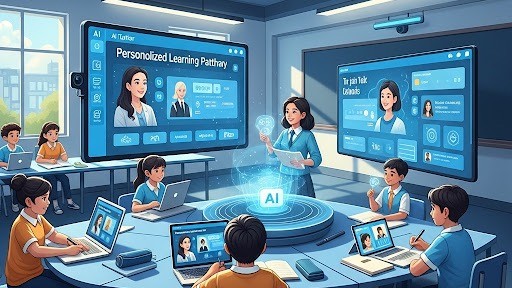
One of the biggest changes in education is the move toward digital and hybrid learning.
Students may learn from classrooms, computer laboratories, libraries, homes, or other locations. Teachers may also need to manage lessons and resources across multiple devices and platforms.
This creates a practical challenge: how can educational institutions keep everything organized and accessible?
A well-designed digital learning environment can help solve this problem by bringing learning materials, assignments, applications, and collaboration into a more centralized workspace.
This is where education management software can become valuable.
Instead of students constantly moving between different systems, institutions can create a more consistent digital environment for accessing educational resources.
Creating a Unified Digital Classroom
Imagine a student working on an assignment at school.
They open their learning materials, complete part of the assignment, save their work, and leave for the day.
Later, they continue working from home.
If everything is spread across different devices and storage locations, continuing that assignment can become frustrating.
A centralized cloud-based environment can make this process much easier.
Students can access their files and learning resources from different locations without having to repeatedly transfer files or worry about where the latest version is stored.
This type of unified digital classroom can support both traditional classroom learning and remote education. Pocket Office, for example, provides a cloud desktop environment designed to bring learning materials, assignments, and collaboration tools into one workspace.
AI Can Support Personalized Learning
Every student learns differently.
Some students understand concepts quickly, while others need additional explanations or more practice. Traditional classroom environments can make it difficult for educators to provide completely individualized learning experiences to every student.
AI has the potential to support more personalized learning.
AI systems can analyze learning patterns and help identify areas where additional support may be useful. They can also assist in recommending resources or adapting learning experiences according to student needs.
This does not mean that every student needs a completely different curriculum. Instead, AI can provide educators with additional information that helps them understand how students are progressing.
The teacher remains at the center of the learning process, while technology provides additional support.
Making Teachers’ Work More Efficient
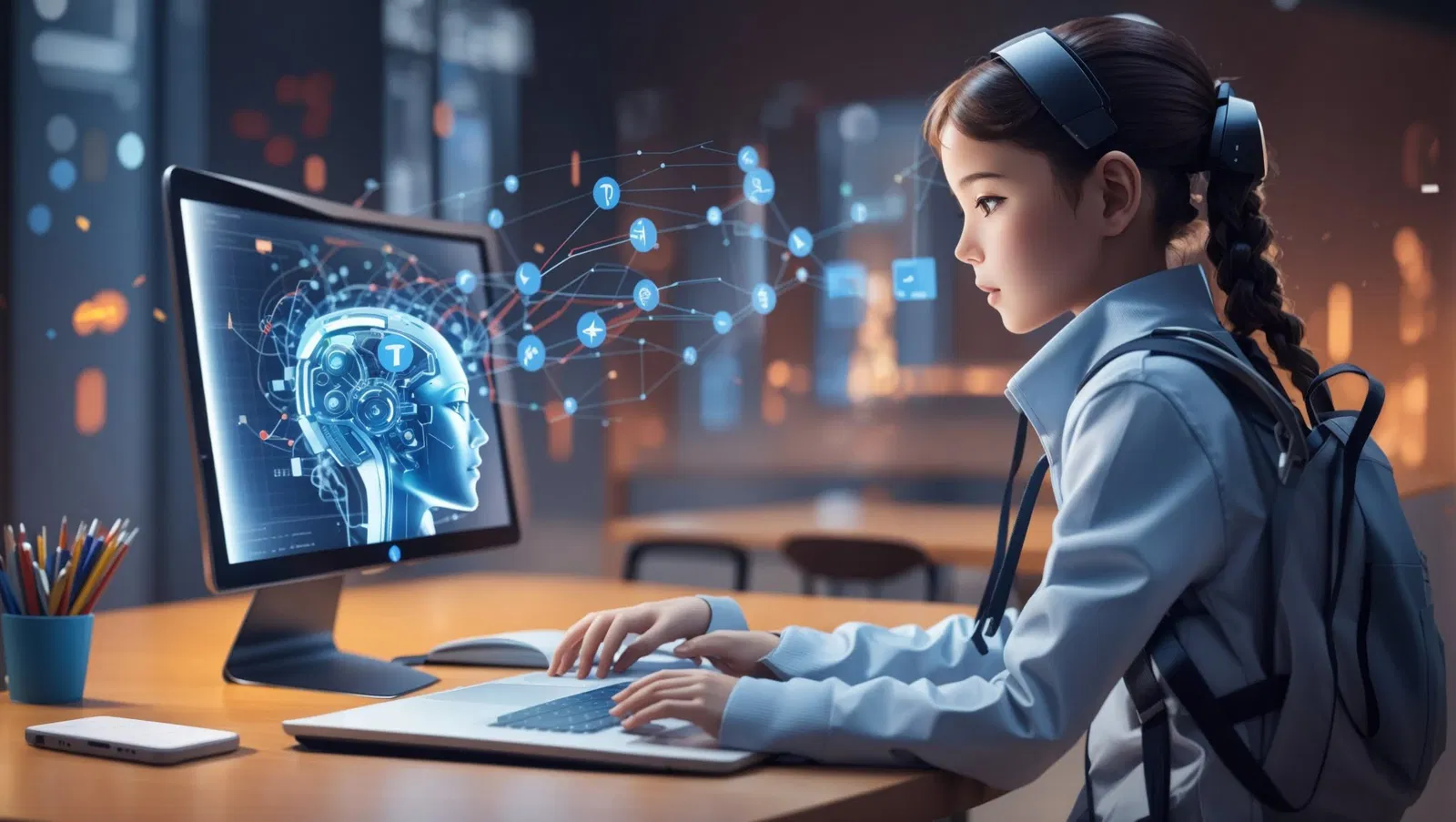
Teachers have responsibilities that extend far beyond classroom instruction.
They may spend significant time preparing materials, organizing assignments, managing documents, communicating with students, and tracking progress.
AI and education management software can help reduce some of this administrative workload.
For example, digital systems can help organize:
- Lesson materials
- Assignments
- Student documents
- Course resources
- Shared files
- Collaboration activities
- Administrative information
When routine organizational tasks become easier, educators can spend more time focusing on teaching and interacting with students.
The Importance of Secure Access
Education involves a large amount of information.
Student records, assignments, examination materials, teaching resources, administrative documents, and other files may need to be shared between different users.
This makes access control particularly important.
A modern education management system should allow institutions to determine who can access specific resources.
For example, students may need access to course materials, while teachers require additional resources for lesson planning and assessment. Administrators may need access to completely different information.
Role-based permissions can help ensure that users see the content relevant to their responsibilities while maintaining greater control over institutional data.
Supporting Classroom-to-Home Learning
Learning does not necessarily stop when students leave school.
Online assignments, research, group projects, and digital learning resources have made it increasingly common for students to continue studying outside the classroom.
This is one reason cloud-based education platforms are becoming increasingly useful.
With a centralized environment, students can begin working at school and continue from home without constantly moving files between devices.
This can be particularly helpful for institutions that support remote, hybrid, or flexible learning models.
Integrating Existing Education Platforms
Educational institutions rarely use a single technology platform.
A school or university may already rely on learning management systems, communication applications, file storage platforms, and classroom tools.
Replacing everything is not always practical.
Instead, integration can be a better approach.
Modern education management software can work alongside existing educational technologies. Pocket Office’s education solution, for example, is designed to integrate with platforms including Google Classroom, Moodle, Canvas LMS, and Microsoft Teams for Education.
This can make it easier for institutions to build a connected digital learning environment without completely changing the tools educators and students already know.
AI Should Support Teachers, Not Replace Them
Whenever people discuss AI in education, one question naturally comes up:
Will AI replace teachers?
The more realistic answer is that AI is more likely to change the role of technology in education than eliminate the need for teachers.
A teacher does much more than deliver information.
Teachers motivate students, recognize emotional and social challenges, encourage critical thinking, manage classroom dynamics, and understand individual circumstances.
AI can process information quickly, automate repetitive tasks, and provide useful insights. But human educators provide context and empathy.
The strongest education model is therefore not “AI versus teachers.”
It is AI supporting teachers and students.
The Role of Cloud Desktops in Modern Education
Another important development alongside AI is the use of cloud desktops.
Instead of depending entirely on a specific physical computer, students and educators can access a cloud-hosted working environment from supported devices.
This can provide greater flexibility for institutions with classrooms, laboratories, remote learners, and distributed teaching teams.
Cloud desktops can also make IT management easier because applications, files, and work environments can be managed more centrally.
Pocket Office uses a Desktop as a Service (DaaS) approach to provide cloud-hosted work environments that support secure access, collaboration, flexibility, and scalability.
What Should Educational Institutions Look For?
When considering new education technology, institutions should look beyond individual features.
A useful digital learning environment should ideally provide:
- Easy access across devices
- Centralized learning resources
- Secure file management
- Role-based permissions
- Collaboration tools
- Integration with existing platforms
- Support for remote learning
- Reliable backup and recovery
- Scalability as the institution grows
Most importantly, technology should make education simpler rather than more complicated.
If teachers and students need to constantly switch between multiple systems just to complete basic tasks, the technology may be creating more problems than it solves.
The Future of AI in Education
AI will likely continue to influence education over the coming years.
We can expect greater use of intelligent learning tools, automated administrative processes, personalized learning support, digital collaboration, and data-driven educational insights.
But the future of education will not be defined by AI alone.
The institutions that benefit most will likely be those that combine good teaching, thoughtful technology, secure infrastructure, and accessible digital learning environments.
AI can provide powerful capabilities, but those capabilities need to be placed inside an environment where students and educators can actually use them effectively.
Final Thoughts
The conversation around artificial intelligence in education is often focused on what AI can do.
A more useful question is: How can AI help create a better learning experience?
When combined with education management software, cloud desktops, collaboration tools, secure access, and existing learning platforms, AI can become part of a much broader digital education ecosystem.
The goal should not be to make education more technological simply for the sake of technology.
The goal should be to make learning more accessible, organized, flexible, and connected for both students and educators.
That is where the real opportunity for AI in education lies.
Get in Touch with Pocket Office
Malaysia: +60 146600012
USA: +60 146600012
India: +91 9967940928
Website: Pocket Office
Leave a Reply