
Artificial Intelligence (AI) has become one of the most powerful forces driving business transformation globally, rapidly growing from a niche technology. What used to seem like science fiction is now everyday reality, helping companies automate operations, understand customers, optimize supply chains, improve decision making and create entirely new business models.
AI has become more accessible to businesses of all sizes in recent years. Massive established companies are being challenged by startups using AI, while billion-dollar companies are investing heavily in embedding intelligent systems into almost every department. AI is transforming how organizations operate and create value in everything from customer service and marketing to finance and cybersecurity.
This is an exciting opportunity and a strategic challenge for entrepreneurs. Understanding where AI is headed helps you make smarter investments, adapt faster to changing market conditions, and create businesses that are future-ready.
In this complete guide, we will look at ten major AI trends every entrepreneur should be aware of, why, and how they can give a competitive edge in the years to come.
Why AI is no longer a nice-to-have
The digital economy is moving faster than ever. Customers want instant service, customized experiences and smooth interactions across multiple channels. At the same time, companies are under increasing pressure to reduce the costs, boost efficiency, and innovate constantly.
Artificial Intelligence helps overcome these challenges by allowing machines to learn from data, recognize patterns, make predictions, and automate tasks that traditionally required human intelligence.
AI systems are different from traditional software because they get better the more information they consume. This capacity to learn and improve is what makes AI one of the most valuable technologies available to modern businesses.
Companies that adopt AI aren’t simply acquiring new tools, they are fundamentally transforming how they operate, compete, and grow.
1. AI Automation Will Be the New Standard for Business
Automation has been around for decades, but AI has taken it to a whole new level. AI-driven systems can understand context and recognize patterns and decide based on changing conditions, not rigid rules.
Now, businesses automate many repetitive processes, including:
Invoice processing for
- Payroll administration
- Data Entry –
- Customer service
- Book an appointment
- Inventory control
- Generate a report
- Classification of Documents
- Processing e-mail
For entrepreneurs this means less manual tasks, less operational costs and more productivity.
Imagine a small online retailer gets hundreds of customer inquiries every day. An AI chatbot can instantly answer frequently asked questions, process returns, provide order updates, and only escalate complex issues to human agents when necessary, eliminating the need to hire more support staff.
This frees up employees to concentrate on higher value activities such as relationship building, innovation and business development.
AI automation will get better and better and businesses will be able to scale operations without scaling employees.
2. Generative AI Will Revolutionize Content and Creativity
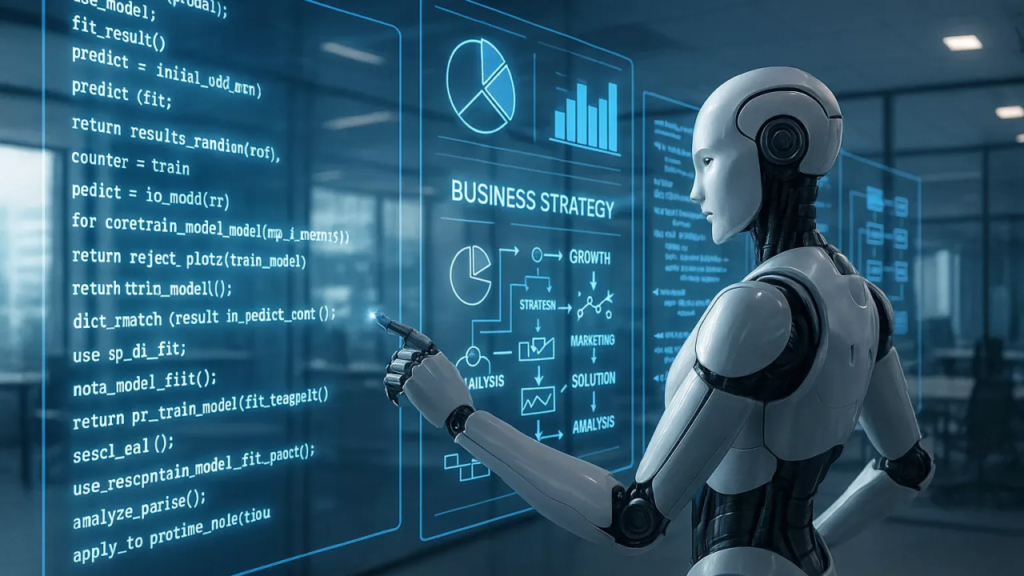
Generative AI is one of the most talked-about developments in recent years.
Generative AI differs from traditional AI in that traditional AI primarily analyzes existing data, whereas generative AI creates entirely new content based on user prompts.
Businesses are now using AI to make:
- Blog Posts
- Marketing Text
- Product descriptions
- Business Proposals.
- Social media messages
- Sales Email
- Pictures Programming code
- Video
- Training manuals
- Technical writing
It dramatically cuts down the time it would take to produce quality content.”
Instead of taking the place of human creativity, generative AI is a productivity partner for entrepreneurs handling numerous tasks.
In just a few minutes, marketing teams can come up with dozens of campaign ideas, writers can get past creative blocks, and developers can speed up software development by providing code recommendations and debugging support.
Businesses that figure out how to integrate AI-generated content with human expertise will generate better work at a fraction of the traditional cost.
3. The Customer Experience Will Be Defined by Hyper-Personalization
Customers today demand that companies comprehend their preferences and offer tailored experiences.
This is made possible by artificial intelligence, which analyzes vast amounts of consumer data, such as:
- History of purchases
- Browsing habits
- Geographical location
- Use of devices
- Client comments
- Look up past searches
- Details about demographics
- Prior exchanges
AI can use this data to make product recommendations, personalize website content, tailor marketing campaigns, and even forecast what customers are likely to buy next.
Movies are suggested by streaming services based on viewing preferences. Online merchants make product recommendations based on personal tastes. Based on consumer spending patterns, banks provide financial products.
Personalization strengthens customer relationships, boosts engagement, boosts conversion rates, and fosters enduring loyalty for business owners.
As AI becomes more sophisticated, customers will increasingly expect every interaction to feel tailored specifically to their needs.
4. AI Helpers Will Become Crucial Business Collaborators
AI assistants are becoming much more involved than just providing straightforward answers.
These days, AI assistants can work as intelligent partners that can manage challenging business tasks like:
- Recapitulating long meetings
- Creating business proposals
- Making presentations
- Performing market analysis
- Making plans for projects
- Organizing calendars
- Composing reports
- Keeping documentation organized
- Content translation
- Generating fresh concepts
Entrepreneurs frequently take on several roles. Business owners can spend more time on strategic decision-making and customer relations thanks to AI assistants’ reduction of administrative workload.
With AI assistance, business owners can finish reports and competitor research in minutes rather than hours.
5. Smarter Decisions Will Be Made Through Predictive Analytics

Every company produces useful data.
Financial reports, inventory levels, website traffic, sales records, and customer transactions all contain information that can be used to inform future choices.
Predictive analytics driven by AI converts past data into useful projections.
Companies are able to forecast:
- Upcoming sales
- Demand during certain seasons
- Churn of customers
- Equipment malfunctions
- Money flow
- Trends in the market
- Shortages of inventory
- Employee attrition
Businesses can foresee difficulties before they arise rather than responding to them after they happen.
Before holiday seasons, for instance, a retailer can anticipate higher demand for specific products, guaranteeing sufficient inventory and preventing stock shortages.
In a similar vein, manufacturers can plan maintenance for their machinery before it breaks down, saving downtime and avoiding expensive interruptions.
Instead of making reactive decisions, entrepreneurs can make proactive ones thanks to predictive analytics.
6. Cybersecurity Will Change Due to AI
Every year, the sophistication of cyber threats increases.
While AI continuously monitors network activity and detects anomalous behavior in real time, traditional security systems frequently fail to identify evolving attack methods.
Cybersecurity systems with AI capabilities can:
- Find malware
- Stop phishing scams
- Determine any unauthorized access
- Monitor user behavior
- Stop questionable transactions.
- Examine network activity
- Automatically react to new threats
Cybercriminals are increasingly focusing on small businesses because they frequently lack specialized security teams.
By detecting threats more quickly than human analysts alone, AI offers enterprise-level security.
AI-driven cybersecurity will become crucial for companies of all sizes as cloud computing and remote work continue to grow.
7. Marketing Will Increase in Intelligence
AI is speeding up the shift in marketing toward being more data-driven.
Businesses now use AI to optimize campaigns based on customer behavior and performance metrics rather than relying on conjecture.
AI enhances marketing through:
- Finding the right audiences
- Budget optimization for advertising
- Creating customized email marketing campaigns
- Enhancing SEO tactics
- Planning posts for social media
- Evaluating the effectiveness of a campaign
- Forecasting the interests of customers
- Coming up with content concepts
In addition to cutting expenses and increasing return on investment, entrepreneurs can improve marketing outcomes.
By automatically modifying campaigns in response to real-time performance data, AI also makes continuous optimization possible.
8. AI Will Transform Human Resources
One of the main issues facing expanding companies is still finding qualified workers.
AI streamlines hiring by automating laborious administrative processes.
AI is used by contemporary HR teams to:
- Resumes on a screen
- Rank the applicants
- Arrange for interviews
- Assess abilities
- Make training program recommendations
- Examine employee involvement
- Estimate the retention of employees
This shortens the hiring process and enhances the quality of decisions.
By spotting skill gaps and suggesting individualized learning opportunities, AI also promotes employee development.
AI allows HR professionals to concentrate on strategic workforce planning and employee experience rather than taking their place.
9. Responsible AI Will Become a Competitive Advantage
As businesses rely more heavily on AI, ethical considerations become increasingly important.
Customers want transparency regarding how their data is collected, stored, and used.
Entrepreneurs should establish clear AI governance policies that address:
- Data privacy
- Algorithm transparency
- Human oversight
- Bias reduction
- Regulatory compliance
- Responsible automation
Companies that prioritize ethical AI practices will build stronger customer trust and protect their reputation.
Responsible AI is no longer just a compliance issue—it has become a competitive differentiator.
10. AI Will Spur Innovation in Every Sector
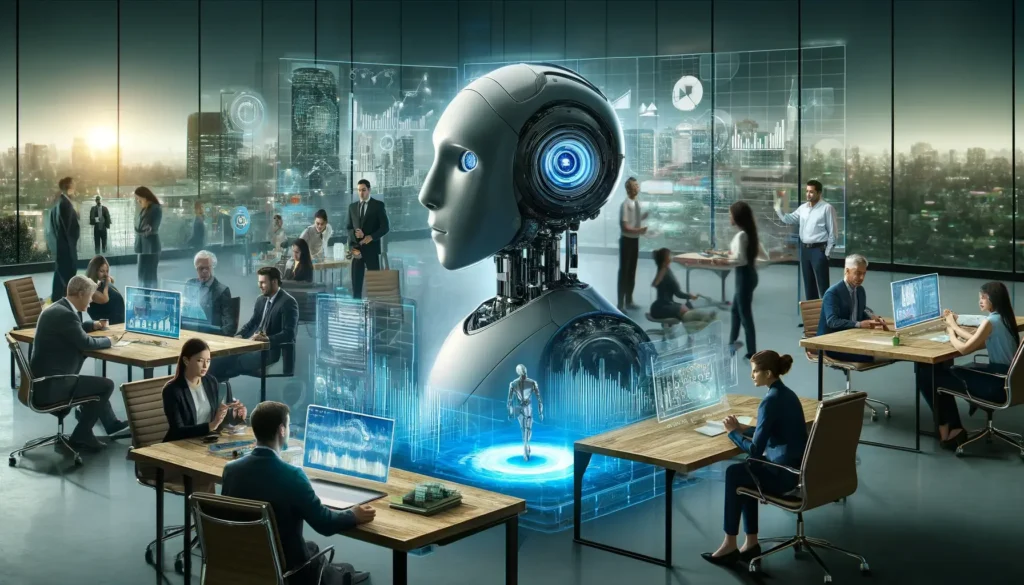
The potential of AI to generate completely new business opportunities may be the most exciting trend.
AI is transforming almost every industry.
Medical care
By evaluating medical images, forecasting disease risks, speeding up drug development, and enhancing patient care, AI helps physicians.
Money
AI is used by banks and other financial organizations for credit scoring, investment analysis, fraud detection, and individualized financial advice.
Retail
Retailers forecast demand, enhance supply chain efficiency, optimize inventory, and customize shopping experiences.
Production
AI is used in factories for robotics, quality assurance, predictive maintenance, and production optimization.
Learning
AI is used by educational institutions to support students with intelligent tutoring systems, automate assessments, and personalize learning.
Logistics
Transportation companies optimize delivery routes, improve warehouse management, forecast shipping demand, and reduce operational costs.
AI is not limited to technology companies—it is becoming a foundational capability across virtually every industry.
Obstacles Entrepreneurs Must Take Into Account
Implementing AI is not without its difficulties, despite its immense potential.
Leaders in business should be ready for:
- Costs associated with initial implementation
- Problems with data quality
- Requirements for employee training
- Regulations pertaining to privacy
- Risks to cybersecurity
- Integration with current systems
- Handling organizational transformation
Careful planning, specific goals, and continuous assessment are necessary for the successful adoption of AI.
Instead of seeing AI as a short-term solution, entrepreneurs should see it as a long-term investment.
How to Start Your AI Journey in Practice
Instead of implementing AI just because it’s popular, concentrate on finding solutions to actual business issues if you’re unsure where to begin.
A useful road map consists of:
- Determine which repetitive tasks take up a lot of staff time.
- Determine how AI can enhance the consumer experience.
- Before growing, start with modest pilot projects.
- Teach staff members how to collaborate with AI tools efficiently.
- Calculate return on investment and performance gains.
- Make sure that customer data is handled responsibly.
- Update AI systems frequently as business requirements change.
Organizations can minimize risk and gain confidence by starting small.
Businesses that adapt will own the future.
One of the biggest developments in technology since the internet is artificial intelligence.
AI is showing a similar trend to how companies that embraced digital transformation outperformed those that opposed change.
Today’s entrepreneurs who invest in AI will be better equipped to handle shifting consumer demands, market upheavals, and international competition.
But putting machines in place of people won’t lead to success. Rather, it will result from fusing AI’s speed, scalability, and analytical power with human creativity, emotional intelligence, ethical judgment, and strategic thinking.
Businesses that provide their staff with intelligent tools, use data responsibly, and maintain flexibility in the face of swift technological change will be the ones of the future.
conclusion
Artificial intelligence is no longer a technology exclusive to big businesses with enormous budgets. It is now practical, accessible, and reasonably priced for companies of all sizes. AI is changing every facet of contemporary business, from improving cybersecurity and spurring innovation to automating repetitive tasks and improving customer experiences.
The message for entrepreneurs is clear: AI is a transformative force that will impact how businesses function, compete, and expand for years to come. It is not just another trend. Businesses can unlock new opportunities, increase efficiency, and create long-lasting value for stakeholders and customers by comprehending the trends described in this article and implementing AI carefully.
The future of business will be powered by intelligent technology, but its true success will depend on visionary leaders who know how to combine AI with human ingenuity. Those who start learning, experimenting, and investing in AI today will be best positioned to lead the industries of tomorrow.
Leave a Reply