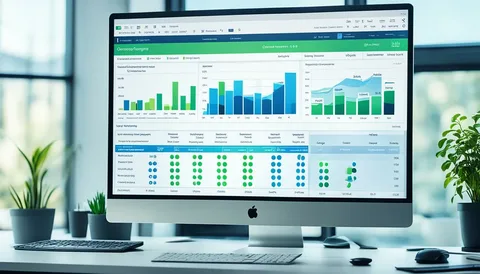
Managing business finances has never been just about numbers.
Behind every invoice, expense report, financial statement, and payment record is a large amount of information that needs to be organized, reviewed, shared, and protected. As businesses grow, managing all of this information through emails, spreadsheets, folders, and individual computers can quickly become difficult.
This is one reason accounting software has become such an important part of modern business operations.
Today’s accounting teams need more than a tool for calculating figures. They need a reliable digital environment where financial documents can be accessed securely, teams can collaborate, and important information can remain organized.
What Is Accounting Software?
At its simplest, accounting software helps businesses manage financial information and accounting-related processes digitally.
Depending on the platform, this can include managing:
- Invoices
- Financial reports
- Expenses
- Accounting records
- Business documents
- Financial data
- Reporting information
- Supporting documentation
For smaller businesses, accounting software can reduce the amount of manual work involved in managing finances. For larger organizations, it can help finance teams maintain consistency and improve access to financial information.
But modern accounting is becoming about more than simply recording transactions.
It is also about how financial information is stored, accessed, shared, and protected.
Why Businesses Are Moving Away From Spreadsheet-Heavy Processes

Spreadsheets are still useful.
They are flexible, familiar, and easy to create. Many businesses rely on them for financial calculations, forecasting, reporting, and analysis.
The problem begins when spreadsheets become the central system for everything.
A finance team may have multiple copies of the same file saved on different computers. Someone might email an updated version to another employee, while another person continues working on an older copy.
Eventually, a simple question becomes surprisingly difficult:
Which file contains the latest information?
Modern accounting software can help reduce this problem by creating a more structured environment for financial information.
Instead of relying on multiple disconnected files, teams can work with centralized financial documents and records.
Centralizing Financial Documents
Finance teams deal with a large number of documents.
Invoices, reports, receipts, contracts, statements, and other financial records may need to be accessed by different people at different times.
Keeping everything organized is therefore essential.
A central financial workspace can provide one place for teams to organize reports, invoices, and financial records.
Pocket Office’s Finance & Accounting solution is designed around this concept, providing a cloud workspace where financial documents can be organized while supporting controlled access and collaboration.
Centralization can make it easier for authorized employees to locate the information they need without searching through multiple computers, email conversations, or disconnected folders.
Security Matters More in Finance
Financial information is highly sensitive.
Businesses need to think carefully about who can access financial records and what those users are allowed to do.
Not everyone in an organization needs access to every financial document.
For example, an accountant may need access to detailed financial records, while a department manager may only need access to specific reports.
This is where access control becomes important.
Modern accounting environments can use permissions to limit access to sensitive information based on roles and responsibilities.
Pocket Office highlights strict access controls and role-based permissions as part of its Finance & Accounting solution, helping businesses control access to sensitive financial information.
Collaboration Without Creating More Versions
Finance is rarely handled by one person.
Depending on the organization, financial work may involve accountants, finance managers, auditors, business owners, department heads, and external advisors.
When several people work on the same information, collaboration can become difficult if everyone maintains separate copies.
Real-time collaboration can help reduce this problem.
When teams can work with the latest version of a document or report, there is less risk of someone accidentally relying on an outdated file.
This is particularly useful when financial information needs to be reviewed or updated by multiple team members.
Accounting Software and Cloud Workspaces
Cloud technology has changed how businesses think about their working environment.
Instead of keeping applications and files exclusively on physical computers, companies can access business resources through cloud-based systems.
A cloud workspace can provide finance teams with access to accounting applications, documents, and other resources from different locations.
This can be useful for businesses with:
- Remote finance teams
- Hybrid employees
- Multiple offices
- External accountants
- Distributed management teams
- Employees who travel frequently
Pocket Office uses a Desktop as a Service (DaaS) model, centralizing desktops in the cloud so teams can access their working environment across locations and devices.
Connecting With Existing Accounting Platforms
Businesses rarely want to replace every financial system they already use.
An organization may already depend on accounting platforms that its finance team knows well.
The better approach can often be to connect existing financial tools with a secure workspace.
Pocket Office’s Finance & Accounting solution states that it works with platforms such as QuickBooks, Zoho Books, Xero, and SAP Financials, helping businesses connect financial tools with document management and reporting workflows.
Integration can make the transition to a more centralized working environment much easier.
Instead of forcing employees to abandon familiar tools, businesses can build a workspace around the systems they already use.
Why Backup and Recovery Are Important
Financial records are too important to depend on a single computer or storage location.
Hardware can fail. Files can be accidentally deleted. Employees can make mistakes. Unexpected technical problems can disrupt access to important information.
This is why backup and recovery should be considered when evaluating accounting technology.
A reliable business environment should have processes that help protect important information and support recovery when something goes wrong.
This is particularly important for financial records because losing access to critical documents can affect reporting, business decisions, and day-to-day operations.
Supporting Remote and Hybrid Finance Teams

The modern finance department doesn’t always work from one office.
Some companies have accountants working remotely. Others use external accounting professionals or operate finance teams across multiple locations.
Cloud-based accounting environments can help these teams stay connected.
Instead of depending on a specific office computer, employees can access their authorized working environment remotely.
This can make financial collaboration more flexible while allowing organizations to maintain centralized controls.
Better Organization Can Improve Financial Decision-Making
Accounting isn’t only about recording what has already happened.
Financial information helps businesses decide what to do next.
Management may use financial reports to understand:
- Revenue performance
- Operating costs
- Cash flow
- Business expenses
- Profitability
- Budget performance
- Future investment opportunities
When financial information is organized and accessible, decision-makers can spend less time searching for information and more time understanding it.
This is one of the biggest benefits of combining accounting tools with a structured digital workspace.
Accounting Software Is Also About People
Technology alone doesn’t create an efficient finance department.
People still need to understand processes, responsibilities, approvals, and financial controls.
The best technology should make these processes easier rather than adding unnecessary complexity.
A good accounting environment should allow finance teams to work naturally while providing the security and organization businesses need behind the scenes.
This means a successful solution should balance:
Ease of use + security + collaboration + organization + accessibility
What Should Businesses Look For in Accounting Software?

There are many accounting platforms available, so choosing the right solution requires looking beyond the feature list.
Businesses should consider whether their chosen environment provides:
Secure Access
Financial information should only be available to authorized users.
Centralized Documents
Teams should have a structured place to manage financial records.
Collaboration
Multiple authorized users should be able to work together without creating unnecessary document duplication.
Integration
The system should work with the accounting and financial tools the business already uses.
Backup and Recovery
Important financial information should have appropriate protection against data loss.
Remote Accessibility
Modern finance teams should be able to work securely from different locations when required.
Scalability
The environment should continue to support the business as the finance team and amount of financial information grow.
The Future of Finance Is More Connected
Accounting is becoming increasingly connected to the rest of the business.
Finance teams need to work with management, sales, operations, HR, procurement, and other departments.
That means financial information cannot remain isolated in one person’s spreadsheet or on one office computer.
Businesses increasingly need connected digital environments where information can move securely between the people who need it.
This is where the combination of accounting software, cloud workspaces, secure file management, and collaboration tools becomes increasingly valuable.
Final Thoughts
Modern accounting software is no longer simply about entering numbers and generating reports.
It is becoming part of a broader digital environment that helps businesses organize financial information, control access, collaborate across teams, and work from different locations.
For growing organizations, the right technology can make financial operations more organized without making them more complicated.
The goal isn’t simply to have more financial software.
The goal is to create a finance environment where the right people can access the right information securely, collaborate efficiently, and make better business decisions.
That is what modern finance and accounting software should ultimately help businesses achieve.
Get in Touch with Pocket Office
Malaysia: +60 146600012
USA: +60 146600012
India: +91 9967940928
Website: Pocket Office
Leave a Reply