Technology has become an essential part of almost every business. From managing customer information and financial records to communicating with teams and running daily operations, businesses depend on software to keep things moving.
But as organizations grow, their technology requirements also become more complicated.
Different teams may use different applications. Data may be spread across multiple systems. Employees may work from different locations. Older software may no longer support changing business requirements.
This is where modern IT software solutions can make a difference.
Rather than simply adding more applications, businesses can use the right combination of software, cloud technology, automation, and IT infrastructure to create a more connected and efficient digital workplace.
What Are IT Software Solutions?
IT software solutions are technologies and services designed to help businesses manage operations, solve technology challenges, improve workflows, and support digital growth.
These solutions can include:
- Custom software development
- Enterprise software
- Cloud-based applications
- IT management software
- Business automation tools
- Software integration
- Data management solutions
- Cybersecurity technologies
- Collaboration platforms
- Digital workplace solutions
The right solution depends on the organization’s size, industry, existing technology, and business objectives.
A small business may need a simple cloud-based application, while a larger organization may require enterprise software that connects multiple departments and systems.
Why Businesses Need Modern IT Software

Many businesses still rely on a mixture of spreadsheets, legacy applications, disconnected databases, and manually managed processes.
While these systems may have worked in the past, they can create problems as the organization grows.
Employees may spend time moving information between applications instead of working on more valuable tasks. Managers may struggle to get a complete view of business operations. IT teams may also have to maintain multiple systems that were never designed to work together.
Modern IT software solutions can help organizations bring these processes together.
The goal isn’t necessarily to replace everything. In many cases, the better approach is to improve existing systems, connect them through integrations, and introduce new technologies where they provide a clear business benefit.
Custom Software Development for Business Needs
Off-the-shelf software can be useful, but it doesn’t always match the way a particular business operates.
This is where custom software development becomes valuable.
Custom software is designed around specific business requirements rather than forcing the organization to change its processes around a generic application.
For example, a company might need software that combines:
- Customer management
- Internal workflows
- Reporting
- Document management
- Employee collaboration
- Business analytics
- Automated processes
A customized solution can be developed around those requirements.
Modern software development companies increasingly combine custom applications with cloud platforms, AI capabilities, integrations, and scalable infrastructure to create systems that can evolve with business needs.
The Role of Enterprise Software
Large organizations often have more complex technology requirements.
Enterprise software is designed to support larger organizations, multiple departments, higher transaction volumes, and more complex workflows.
Enterprise applications can help businesses manage areas such as:
- Finance
- Human resources
- Customer relationships
- Supply chains
- Operations
- Sales
- Project management
- Data analytics
The biggest advantage is often integration.
When different departments can work with connected systems and shared information, businesses can reduce duplication and improve visibility across operations.
Cloud IT Solutions Are Changing the Way Businesses Work
Cloud technology has changed how organizations access software and IT resources.
With cloud IT solutions, businesses can access applications, data, and computing resources without relying entirely on local infrastructure.
This can be particularly useful for organizations with remote and hybrid teams.
Cloud-based solutions can provide:
- Flexible access
- Easier scalability
- Centralized management
- Remote collaboration
- Reduced dependence on physical infrastructure
- Faster deployment of new services
Cloud platforms are also increasingly important for AI and modern software development because they provide scalable computing, storage, and development environments.
IT Software and Business Automation
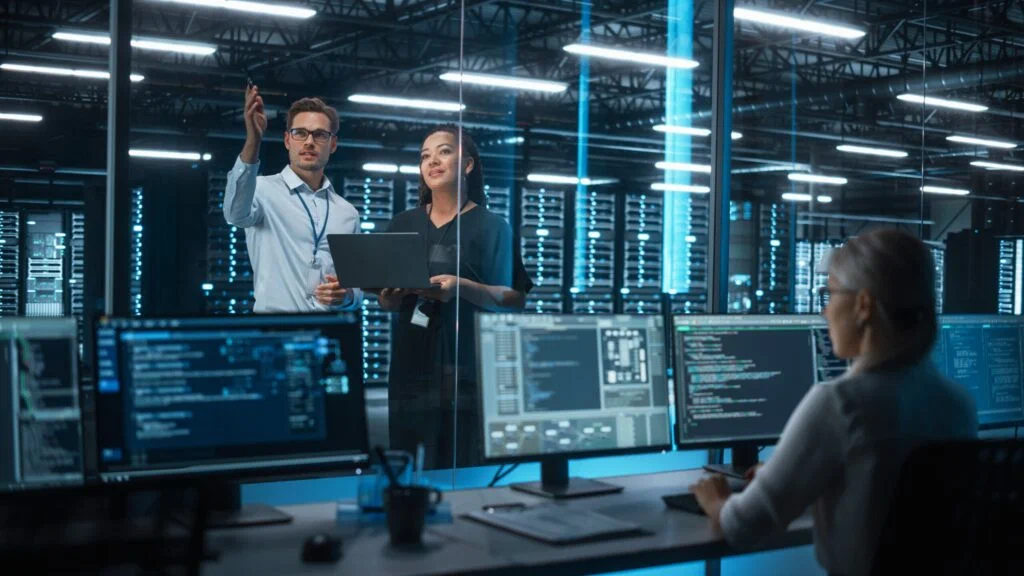
Repetitive processes can consume a surprising amount of employee time.
Employees may have to manually enter information, create reports, transfer data between systems, or perform routine administrative tasks.
IT automation software can help reduce this workload.
For example, automation can support:
- Document processing
- Data entry
- Approval workflows
- Notifications
- Report generation
- Customer communications
- IT service requests
- Routine system processes
Automation doesn’t necessarily mean removing people from the process.
Instead, it can allow employees to spend more time on activities that require creativity, judgment, and decision-making.
AI and Modern Software Solutions
Artificial intelligence is becoming an important part of modern software development and business technology.
Businesses are increasingly moving beyond AI experiments and looking at how AI can be integrated into existing applications and operational processes. Current technology trends show growing demand for AI implementation, integration, and governance within established enterprise environments.
AI can be incorporated into IT software solutions in areas such as:
- Intelligent automation
- Data analysis
- Customer support
- Document processing
- Predictive analytics
- Workflow optimization
- AI assistants
- Business intelligence
The important consideration is not simply whether a company can add AI. The better question is whether AI can solve a real business problem.
Why Software Integration Matters
Businesses rarely use just one software application.
A company might use one platform for accounting, another for customer management, another for communication, and another for project management.
If these systems cannot communicate with each other, employees may have to manually move information between them.
Software integration solutions can connect these systems and create more efficient workflows.
For example, information entered into one application could potentially be shared with another system automatically, reducing duplicate data entry and improving consistency.
Integration is especially important for businesses undergoing digital transformation because it allows organizations to modernize their technology without necessarily replacing every existing system.
IT Management Software for Better Visibility
As the number of applications and devices increases, IT teams need better ways to manage technology.
IT management software can help organizations monitor and manage their technology environment.
Depending on the solution, this can include:
- IT assets
- Applications
- Devices
- User access
- Service requests
- System performance
- Security activities
- Software updates
Modern IT service management platforms are also increasingly incorporating automation and AI to streamline support workflows and improve IT operations.
Security Should Be Part of the Solution
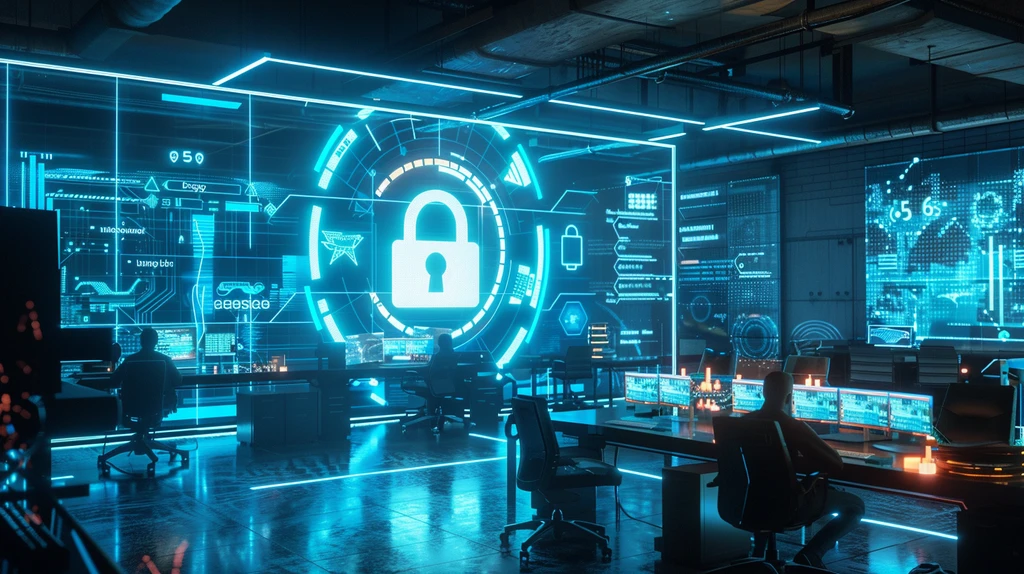
Software modernization should never ignore security.
Businesses store sensitive customer information, financial data, employee records, intellectual property, and operational information across their technology environments.
Modern IT software solutions should therefore consider security from the beginning.
Important areas include:
- User authentication
- Role-based access
- Data protection
- Secure integrations
- Software updates
- Backup and recovery
- Monitoring
- Compliance requirements
Security is not something that should be added after the software has already been deployed. It should be part of the design and implementation process.
Supporting Remote and Hybrid Teams
The modern workplace is no longer limited to one office.
Employees may work from home, different offices, client locations, or while traveling.
This makes reliable digital access increasingly important.
Cloud-based applications and centralized digital workspaces allow employees to access the tools and information they need without being tied to a specific physical location.
For businesses with distributed teams, this can improve collaboration while giving IT teams greater control over applications and access.
How Pocket Office Supports Modern IT Workflows
Pocket Office provides a secure and scalable Desktop as a Service (DaaS) environment designed to give organizations centralized access to their digital workspaces.
For IT and software development teams, this can provide a consistent environment for accessing:
- Development tools
- Technical documentation
- Internal applications
- Dashboards
- Business systems
- Collaboration tools
- Project resources
Pocket Office also supports integrations with development and collaboration platforms such as GitHub, GitLab, Jira, Bitbucket, Slack, and Microsoft Teams.
This approach can help organizations provide employees with a consistent digital workspace across different devices and locations.
Choosing the Right IT Software Solution
There is no single software solution that works for every business.
Before investing in new technology, organizations should consider several questions.
What problem are we trying to solve?
Start with the business problem rather than the technology.
Can the solution integrate with existing systems?
Integration can be critical when a company already uses multiple business applications.
Can it scale?
The software should be able to support future growth without requiring a complete replacement.
Is it secure?
Data protection, access controls, and security practices should be evaluated before implementation.
Is it easy for employees to use?
Even powerful technology has limited value if employees struggle to use it.
What support is available?
Businesses should consider ongoing maintenance, updates, troubleshooting, and technical support.
The Future of IT Software Solutions
The future of IT software solutions will likely be shaped by several connected technologies.
Cloud computing will continue to support flexible digital environments. AI will become increasingly integrated into business applications. Automation will help reduce repetitive work. Software integration will connect previously separate systems.
At the same time, businesses will need to pay greater attention to security, governance, data management, and responsible technology adoption.
The direction is already visible: businesses are moving from isolated technology experiments toward integrated systems that combine software, cloud, AI, and ongoing IT operations.
Final Thoughts
Modern IT software solutions are not simply about purchasing new software.
They are about creating a technology environment that helps people work more efficiently, gives businesses better access to information, and supports long-term growth.
From custom software development and enterprise applications to cloud IT solutions, automation, AI, and software integration, organizations have more opportunities than ever to modernize their operations.
The most effective technology strategy is not necessarily the one with the most tools. It is the one that connects the right tools to the right business needs.
As businesses continue moving toward cloud-based, automated, and AI-enabled workplaces, having a secure and flexible digital environment will become increasingly important.
Pocket Office helps organizations take that step by providing centralized, cloud-hosted workspaces designed for modern business operations.
Get in Touch with Pocket Office
Malaysia: +60 146600012
USA: +60 146600012
India: +91 9967940928