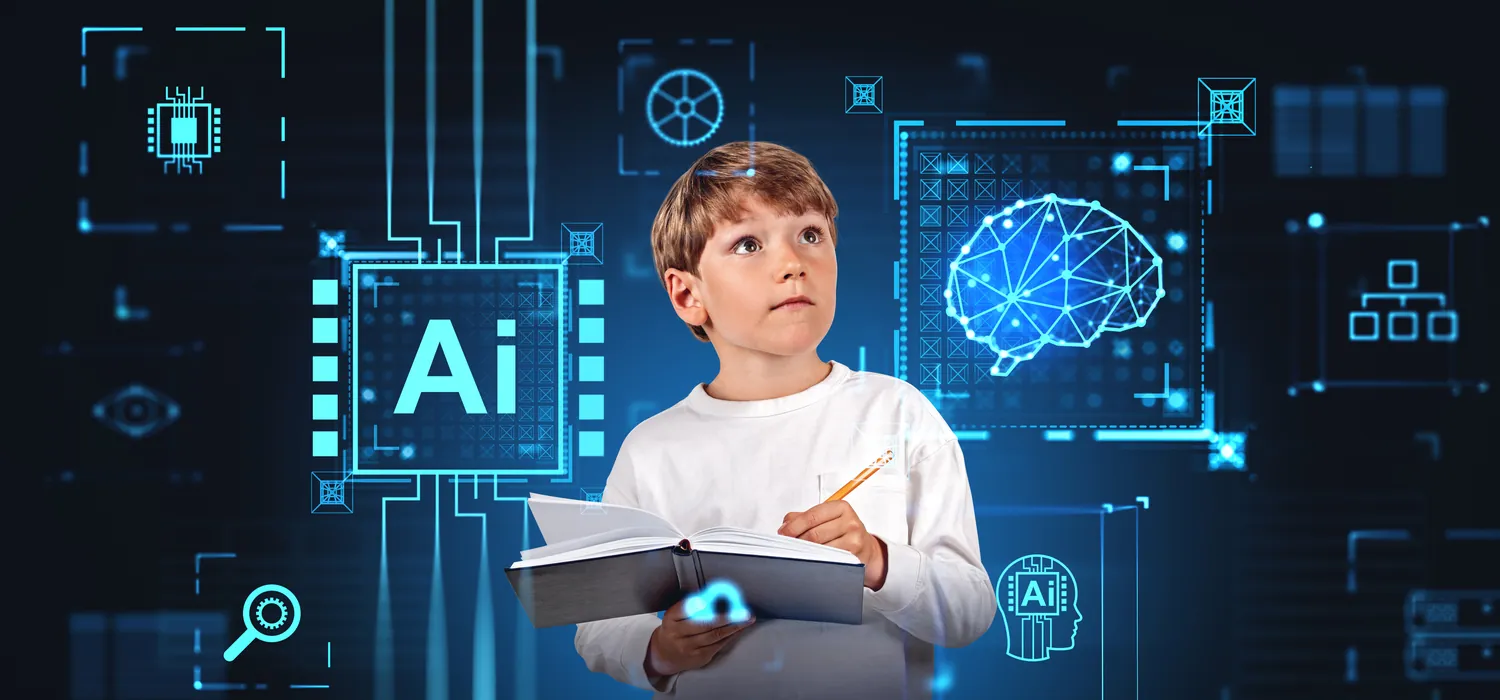
Education has always kept pace with technological developments. Whether it’s textbooks and computer labs, or online classrooms and learning management systems, each new technology has altered the way students learn and the way teachers carry out their work. At present, AI in education is undergoing the next major change.
Artificial intelligence is currently being employed to aid with lesson planning, personalized learning, giving students feedback, carrying out administrative tasks, and facilitating digital collaboration. The aim, though, must not be to replace teachers; rather, artificial intelligence in the field of education should enable teachers to spend less time on routine tasks and more time concentrating on their students.
The latest advances in educational technology are pointing in the same direction: increasingly, AI tools are being designed so as to involve educators while at the same time providing students with more personalized learning support.
What does AI mean in the context of education?

The use of artificial intelligence technologies in the field of education involves providing support for teaching, learning, assessment, administration, and educational decision-making.
AI-powered systems differ from traditional educational software in that they are able to analyze information, recognize patterns, produce content, and adjust their responses according to user interactions.
For example, an AI in education platform can be used to detect the areas in which a student is having difficulties and then suggest further learning materials. In a similar way, teachers can make use of AI tools for education when preparing lesson plans, quizzes, summaries, or other learning resources more efficiently.
The key thing to note is that AI functions most effectively when it acts as a supportive tool; the teachers continue to give the personal guidance, context, encouragement, and judgment which technology is unable to provide.
How AI Is Transforming Learning
A major opportunity concerning artificial intelligence in the field of education is personalization.
In traditional classrooms it is common for teachers to have to give the same lesson to a large number of students, even though each student learns in a different way; some students may grasp a concept right away while others will need further explanations and practice.
An AI learning platform is capable of helping to produce more flexible learning experiences by examining the way in which students interact and then adjusting the content to meet their individual needs.
For example, AI-powered learning systems can help provide:
* Personalized study materials
* Additional practice questions
* Instant feedback
* Learning recommendations
* Different explanations of difficult concepts
* Progress insights for teachers
Research into AI and personalized learning is now looking more and more at how these technologies can get education away from the one-size-fits-all method.
AI Tools for Teachers
AI is altering not just the way that students learn but also the way teachers handle their workload.
Teachers take a great deal of time on preparing their lessons, on making assessments, on arranging resources, on checking students’ work, and on carrying out administrative tasks. AI tools designed for use in education, when carefully implemented, can help with some of these activities.
For example, teachers can use AI to help generate:
* Lesson ideas
* Quiz questions
* Study guides
* Learning activities
* Summaries
* Draft feedback
* Educational resources
It doesn’t mean that teachers should just take everything that an AI system produces; they still need to go over it, make any necessary adjustments, and give their approval.
The best way to proceed is to use AI in an educational context with teachers taking the lead at present, various education projects place a strong emphasis on this approach, involving the use of AI for support while still holding teachers accountable for making instructional decisions.
AI in Schools: Creating More Personalized Classrooms
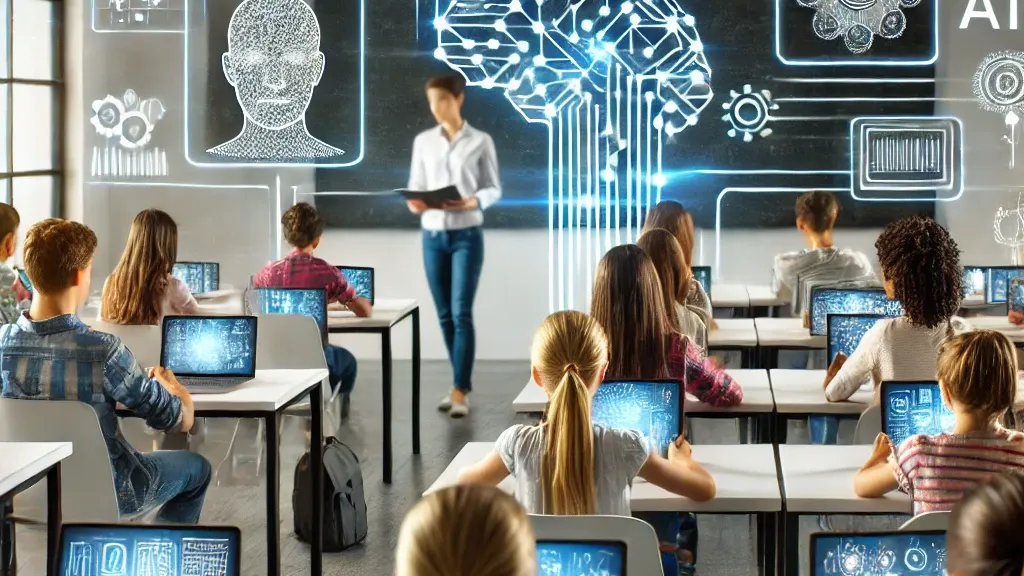
AI is also opening up new possibilities for personalized teaching in schools.
Picture a classroom in which students are able to get extra explanations when they have difficulty with a particular subject, while those who are already keeping up can proceed to more difficult material. With the aid of AI, teachers can help meet these various learning needs without having to get all the students to follow the same path.
AI can also assist teachers in detecting patterns in how students perform. Rather than having to wait until the end of a term to realise that a student is falling behind, educators might be able to pick up on learning gaps earlier and then give targeted support.
Technology should rather supplement classroom teaching than substitute for the relationships which make education effective, and current debates in the field of education still stress the need to keep the human link between teachers and students.
AI and Remote Learning
A further important use of artificial intelligence for learning is in remote and hybrid education.
Students are able to access lessons from classrooms, from their homes, from libraries, or from other places. Through the use of a central digital environment it becomes easier to access the same learning materials and to carry on their work on different devices.
Cloud-based environments can offer institutions that provide remote learning a consistent workspace for both students and teachers.
That’s where technologies like Pocket Office can prove useful; they allow educational institutions to give users access to the applications, learning materials, and digital resources they need without having to rely completely on a particular physical device.
AI Educational Technology and Digital Classrooms
AI educational technology is becoming part of the broader digital transformation in education.
Modern institutions may use a combination of:
* Learning management systems
* Cloud desktops
* Collaboration platforms
* AI-powered learning tools
* Digital classrooms
* Student information systems
* Online assessment platforms
The true value is derived from getting these technologies to work together rather than viewing each application as a separate system.
For instance, Pocket Office is able to offer a centralised digital workspace which includes tools like Google Classroom, Moodle, Canvas LMS, and Microsoft Teams for Education. This in turn helps both students and teachers to access the resources they need within a consistent environment.
The Benefits of AI for Education
So long as AI is used responsibly, AI in the field of education can offer a number of practical advantages.
1. Personalized Learning
AI can be used to adapt learning materials to the various needs of different students, so that learners get extra assistance or more advanced material when this is appropriate.
2. Faster Feedback
Systems powered by AI are able to give instant feedback on some activities, which helps students to spot their errors and keep on learning instead of having to wait all the time for manual checking.
3. Less administrative work
Teachers and administrators may use AI to help with routine tasks, which in turn allows them more time for teaching, mentoring, and providing support to students.
4. Insights into Better Learning
AI is able to examine learning activity and identify patterns which may assist educators in understanding student progress.
5. Greater Accessibility
AI may provide translation, different explanations, and other tools which can make it easier for students with various needs and backgrounds to learn.
6. Flexible Learning
Tools based on the cloud and supported by AI can make it easier for students to keep on learning when they are at different places and using different devices.
What are the difficulties that AI presents in the field of education?
Although it has potential, artificial intelligence in education also presents important challenges.
Data privacy is among the most important factors to consider. The fact is that educational institutions deal with sensitive information concerning students, teachers, and families. Any technology that is used in an educational setting must have suitable security and access controls.
There is also the possibility that students may become too reliant on AI. When a student uses AI merely in order to get an answer and not to understand the concept, the technology can have a negative effect on the learning process.
AI-generated information may also be wrong, so teachers and students should acquire good abilities in checking sources, assessing information, and questioning the answers given by AI.
The OECD has also pointed out the quick uptake of generative AI in the field of education and the importance of adopting careful methods for using it effectively.
The Future of Artificial Intelligence in Education

The role of artificial intelligence in education is not going to involve replacing classrooms with AI; it will rather consist of establishing better partnerships between teachers, students, and technology.
AI is capable of carrying out some repetitive tasks. Digital platforms can help make resources more accessible. Personalised systems can offer extra learning support. In the meantime, teachers can keep on focusing on the things they do best, such as motivating their students, understanding their individual situations, encouraging critical thinking, and developing meaningful relationships.
The more capable AI becomes, the more educational institutions will have to concentrate on both taking up new tools and on developing responsible strategies for their use.
The institutions which gain the most from AI do not have to be the ones making the greatest use of technology; they might be those who use technology with a definite educational aim.
How Pocket Office Supports Modern Education
For schools, universities, training organizations and other educational institutions, it is important to have a reliable digital workspace if they are to support modern learning.
Pocket Office offers a cloud-based desktop that allows students and educators to access learning materials, applications, assignments, and collaboration tools from different devices.
Because it offers support for platforms including Google Classroom, Moodle, Canvas LMS, and Microsoft Teams for Education, Pocket Office enables the creation of a consistent digital learning environment.
What this leads to is an improved flexibility in the field of education, enabling students to carry on with their studies outside of the conventional classroom while at the same time allowing the institutions to retain greater control over their digital environment.
Final Thoughts
AI in the field of education doesn’t just mean introducing artificial intelligence into classrooms; it means using technology in a thoughtful way to make learning more personalized, accessible, flexible, and efficient.
There are rapidly growing possibilities ranging from AI tools for education and personalized learning to cloud-based digital classrooms and AI-powered administrative support.
The most effective method will still be one that puts people at the heart of things. While technology can offer information, suggestions, and help, it is teachers who give the guidance and personal connection that transform these tools into valuable learning experiences.
As AI for education continues to evolve, schools and institutions have an opportunity to build learning environments that combine the best of
Get in Touch with Pocket Office
Malaysia: +60 146600012
USA: +60 146600012
India: +91 9967940928
Leave a Reply