
Running a retail business can look simple from the outside. Customers walk into a store, products are sold, and orders are shipped.
Behind the scenes, however, there is a lot happening.
Retail teams have to keep track of inventory, manage stores and warehouses, update product information, coordinate employees, handle online orders, and make sure customers receive a consistent experience across every channel.
As a retail business grows, managing all of this manually can become difficult.
This is where retail management software can help.
Modern retail software brings important business information together so teams can spend less time switching between systems and more time focusing on customers and daily operations.
What Is Retail Management Software?
Retail management software is a digital solution that helps businesses manage everyday retail operations from a centralized environment.
Depending on the platform, it can support areas such as:
- Inventory management
- Product information
- Sales and orders
- Store operations
- Customer information
- Employee collaboration
- Reporting
- Ecommerce management
- Multi-location operations
The biggest advantage is visibility.
Instead of having inventory information in one system, marketing materials in another, and operational documents somewhere else, teams can work with information from a more connected environment.
Modern retail management platforms increasingly focus on bringing physical stores, ecommerce, inventory, customer information, and reporting together.
Why Retail Businesses Need Better Management Systems
Retail becomes more complicated as a business grows.
A small store may be able to manage inventory and daily operations using spreadsheets. But once a company has multiple stores, warehouses, an online shop, or several sales channels, manual processes can quickly become difficult to maintain.
For example, a product might be sold online while another customer purchases the same product in a physical store.
If inventory information is not updated properly, the business could end up promising a product that is no longer available.
This is one reason retail inventory management software has become so important. Centralized inventory systems can keep stock information synchronized across different locations and sales channels.
Managing Inventory Across Multiple Locations
Inventory is one of the biggest challenges for growing retailers.
A business may have:
- Retail stores
- Warehouses
- Stockrooms
- Ecommerce inventory
- Pop-up locations
- Third-party fulfillment centers
Knowing exactly where products are located can make a major difference.
Multi-location inventory management software can give retail teams a clearer picture of stock across different locations.
When a product is sold, returned, transferred, or received, the inventory record can be updated so employees have more accurate information.
This can help businesses reduce problems such as overstocking, stockouts, and unnecessary manual reconciliation.
Keeping Retail and Ecommerce Connected
Customers don’t think in terms of “online” and “offline” systems.
They simply expect a smooth shopping experience.
Someone might discover a product on a website, visit a store to see it, and then place an order online. Another customer may purchase online and choose to collect the item from a physical store.
This is why omnichannel retail management has become increasingly important.
Retail software can help connect ecommerce stores, physical locations, marketplaces, and other sales channels so that information stays more consistent.
Modern retail systems increasingly aim to provide a shared view of inventory, orders, and customer information across physical and digital channels.
Real-Time Inventory Visibility
Imagine a customer asking, “Do you have this product in your other store?”
If employees have to call another location or search through separate spreadsheets to find the answer, it slows everything down.
With real-time inventory management, staff can check available stock more easily.
This can help employees:
- Check product availability
- Locate inventory at another store
- Identify low-stock products
- Coordinate transfers
- Support online orders
- Reduce overselling
Accurate inventory information can also improve the customer experience because employees can provide more reliable answers.
Supporting Multi-Location Retail Teams
Retail businesses with several locations often face another challenge: keeping everyone on the same page.
Store managers, warehouse teams, headquarters, marketing staff, and operations teams may all need access to different information.
A centralized retail management system can help create a shared digital environment where authorized employees can access the information relevant to their responsibilities.
For example, headquarters may manage marketing materials while store teams access product information and operational documents.
This makes collaboration easier without requiring every employee to have access to everything.
Managing Retail Documents and Marketing Assets
Retail isn’t only about inventory.
Businesses also create and manage large amounts of digital content.
This can include:
- Product images
- Marketing campaigns
- Promotional materials
- Product information
- Sales reports
- Operational documents
- Store guidelines
- Training materials
Keeping these files organized becomes increasingly important as a retail organization grows.
A centralized cloud workspace can give teams a single place to access approved files and business applications.
This can be especially useful when different stores need access to the same marketing materials or operational documents.
Retail Software and Workflow Automation
Retail employees often spend time on repetitive tasks.
Updating records, preparing reports, checking stock levels, communicating changes, and processing routine requests can all take time.
Retail workflow automation can help reduce some of this repetitive work.
For example, businesses can automate certain notifications when stock levels become low or create workflows for routine operational approvals.
The goal isn’t to remove people from the process.
It’s to give employees more time to focus on customers, sales, and decisions that require human judgment.
Retail technology is increasingly combining automation with real-time data to improve areas such as inventory, fulfillment, and operational efficiency.
The Role of AI in Retail Management
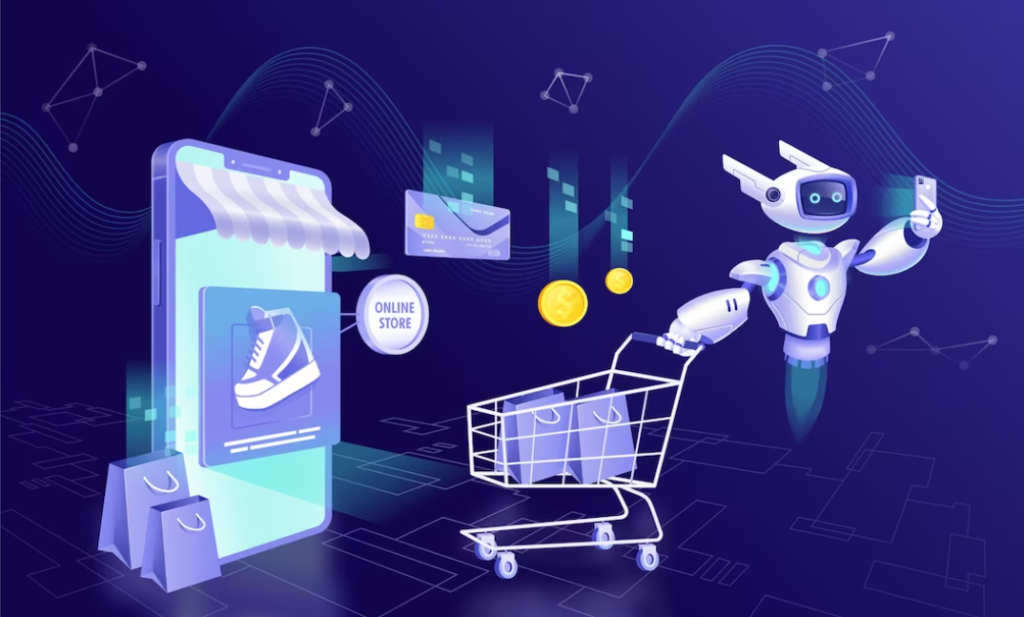
Artificial intelligence is also becoming more relevant to retail.
AI can support areas such as:
- Demand forecasting
- Product recommendations
- Customer service
- Inventory planning
- Marketing personalization
- Data analysis
- Workflow automation
For example, AI-powered forecasting can analyze historical sales patterns and other information to help retailers anticipate future demand.
This can help businesses make more informed decisions about purchasing and inventory.
However, AI is most useful when it is connected to reliable business data. If inventory information is inaccurate, even an advanced AI system may produce poor recommendations.
That is why building a strong digital foundation should come before adding more advanced technology.
Connecting Retail Software With Existing Platforms
Most retailers already use several applications.
An ecommerce business might use Shopify or WooCommerce, while other organizations may use different POS, accounting, ERP, warehouse, or customer management systems.
The challenge is making all of these tools work together.
Retail software integration can help connect existing systems and reduce the need for employees to manually move information between platforms.
Pocket Office’s retail solution supports integrations with platforms such as Shopify, WooCommerce, and Magento, helping teams access retail applications and business information within a centralized cloud workspace.
This can be particularly useful for businesses managing both physical stores and ecommerce operations.
Secure Access for Retail Teams
Retail organizations also need to think about security.
Employees may have access to customer information, sales data, product information, business reports, and other sensitive resources.
Not everyone needs access to everything.
Role-based permissions can help organizations provide employees with access based on their responsibilities.
For example, a store employee may need product and operational information, while a management team may need access to broader reports.
Pocket Office is designed around controlled access, with features such as role-based access, team permissions, secure data protection, and centralized workspaces.
Supporting Retail Teams From Anywhere
Modern retail businesses aren’t always managed from one office.
Operations teams may work from headquarters, store managers may work from individual locations, and executives may need access while traveling.
A cloud-based workspace can make it easier for authorized users to access their work environment from different locations.
Pocket Office provides a browser-based cloud desktop that brings files, applications, and teams into one unified environment without requiring users to be tied to a specific physical device.
For retailers with multiple locations, this can provide a more consistent way of working.
How Pocket Office Supports Retail & E-commerce
Pocket Office provides a secure and scalable cloud workspace designed to support modern retail and ecommerce teams.
The retail solution focuses on helping teams collaborate around:
- Inventory information
- Marketing assets
- Operational documents
- Product information
- Reports
- Ecommerce platforms
- Multi-location workflows
By bringing these resources into a centralized digital workspace, teams can work from a more consistent environment across stores, warehouses, and headquarters.
Pocket Office also supports integrations with retail platforms such as Shopify, WooCommerce, and Magento, making it easier for teams to work with their existing digital tools.
Choosing the Right Retail Management Software
There is no single retail management system that is perfect for every business.
Before choosing a solution, retailers should consider a few practical questions.
Can it support multiple locations?
If you’re planning to grow, the system should be able to handle additional stores and warehouses.
Can it manage inventory effectively?
Real-time visibility and accurate stock information are essential for modern retail operations.
Does it support ecommerce?
If you sell online, your retail system should work with your ecommerce channels.
Can it integrate with existing software?
Good integration can reduce duplicate work and data silos.
Is it secure?
Look for appropriate access controls and data protection features.
Is it easy for employees to use?
A system is only useful if employees can actually use it comfortably in their daily work.
The Future of Retail Management
Retail is becoming increasingly connected.
Physical stores, ecommerce websites, warehouses, marketplaces, customer data, and marketing channels are no longer separate parts of the customer journey.
Retailers are moving toward unified systems that provide a shared view of operations across these channels. Current retail technology trends also point toward greater use of AI, automation, real-time inventory visibility, and connected commerce.
But technology should not make retail operations more complicated.
The best retail management software should make everyday work easier.
It should help employees find information quickly, give managers better visibility, and allow customers to receive a more consistent experience.
Final Thoughts
Running a growing retail business requires more than simply selling products.
Behind every successful store or ecommerce business is a system for managing inventory, people, documents, orders, information, and customer experiences.
Retail management software can help bring these areas together and give businesses a clearer view of their operations.
From retail inventory management and multi-location support to ecommerce integration, workflow automation, and secure cloud access, the right technology can make everyday retail work more organized and manageable.
Pocket Office helps retail and ecommerce teams work from a centralized cloud environment where authorized users can access their applications, files, inventory information, marketing assets, and business documents.
As retail continues to move toward connected, omnichannel experiences, having a flexible digital workspace can help businesses stay organized while giving their teams the tools they need to work efficiently.
Get in Touch with Pocket Office
Malaysia: +60 146600012
USA: +60 146600012
India: +91 9967940928