
Healthcare has always depended on people, but technology is becoming an increasingly important part of how those people work.
Doctors, nurses, administrators, specialists, laboratories, clinics, and healthcare organizations deal with enormous amounts of information every day. Patient records, medical documents, reports, appointments, administrative files, and communication all need to be handled efficiently and securely.
This is where AI in healthcare is attracting so much attention.
Artificial intelligence can help healthcare organizations process information, automate repetitive workflows, support decision-making, and improve the way teams access and manage data.
But AI is only one part of the bigger picture.
For healthcare organizations to use AI effectively, they also need secure systems, organized information, reliable workflows, and controlled access to sensitive data.
What Is AI in Healthcare?
AI in healthcare refers to the use of artificial intelligence technologies to support healthcare-related activities.
Depending on the application, AI can assist with areas such as:
- Medical data analysis
- Administrative automation
- Healthcare documentation
- Patient communication
- Workflow management
- Research
- Medical imaging
- Personalized healthcare
- Predictive analysis
- Resource management
The goal isn’t necessarily to replace healthcare professionals.
Instead, AI can take care of certain repetitive or information-heavy tasks, allowing healthcare professionals to focus more on patients and important decisions.
Why Is Artificial Intelligence in Healthcare Becoming More Important?
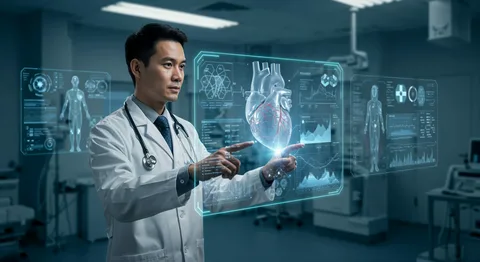
Healthcare organizations are generating more digital information than ever.
Hospitals and clinics may have electronic health records, medical reports, imaging files, administrative documents, billing information, and other digital resources spread across different systems.
Managing this information efficiently can be challenging.
A healthcare professional may need information from several systems before completing a task. An administrator may need to find a specific document quickly. A remote team member may need secure access to a hospital resource from another location.
This creates a need for technology that doesn’t just collect information but helps organizations organize and access it efficiently.
The Importance of Secure Healthcare Data
One of the biggest challenges in healthcare technology is security.
Healthcare information can be extremely sensitive. Patient information, medical records, and organizational documents should not be freely accessible to everyone.
This makes access control an essential part of any modern healthcare technology environment.
Organizations need to consider questions such as:
- Who can access patient information?
- What information should each employee see?
- Can access be restricted by role?
- Can activity be monitored?
- How is information protected?
- What happens if data is accidentally deleted?
A modern healthcare environment should therefore combine accessibility with strong security controls.
Pocket Office’s healthcare solution emphasizes role-based permissions, controlled access, privacy, and regulatory compliance to help healthcare teams manage sensitive information securely.
Centralized Healthcare Files Can Make Work Easier
Imagine a healthcare organization where important documents are stored across different computers, local folders, email attachments, and disconnected systems.
Finding the correct document could take unnecessary time.
A centralized digital workspace can make information easier to organize and access.
Healthcare management software can help teams work with documents and information across hospitals, clinics, departments, and remote locations.
Instead of relying entirely on local systems, authorized users can access the information they need through a controlled digital environment.
This can also support collaboration between teams that are not physically located in the same place.
AI Can Reduce Repetitive Administrative Work
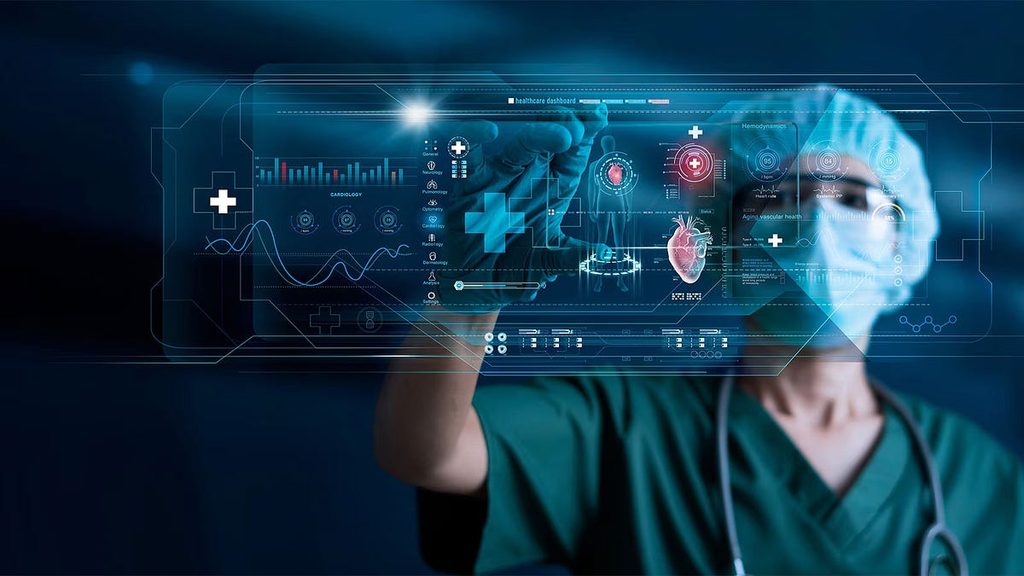
Healthcare professionals already have demanding workloads.
Administrative tasks can add another layer of pressure.
Activities such as organizing documentation, preparing reports, updating records, and managing workflows can consume valuable time.
This is where healthcare workflow automation can make a difference.
Automated workflows can help move information between processes, reduce repetitive manual steps, and make routine operations more consistent.
AI can add another layer by helping analyze information and identify patterns that may otherwise require significant manual effort.
The objective is not simply to automate everything.
It is to automate the right things.
Supporting Remote Healthcare Teams
Healthcare is no longer limited to a single physical location.
Hospitals and clinics may have specialists working across different facilities. Administrative teams may work remotely. Telehealth services may connect healthcare professionals and patients from different locations.
This makes remote-ready workflows increasingly important.
Healthcare teams need to be able to access necessary systems and documents without compromising security.
Pocket Office’s healthcare solution is designed to support distributed teams and telehealth workflows while maintaining controlled access to sensitive healthcare information.
How Telehealth Is Changing Healthcare Work
Telehealth has changed the way many healthcare services can be delivered.
A patient may not always need to physically visit a healthcare facility for every interaction. Consultations, follow-ups, administrative communication, and certain types of monitoring can increasingly happen remotely.
However, telehealth is not just about video calls.
Behind every remote healthcare interaction are systems for managing information, documents, communication, scheduling, and other workflows.
This means healthcare organizations need digital infrastructure that can support remote work while maintaining appropriate security and access controls.
Healthcare Teams Need Better Collaboration

Healthcare is highly collaborative.
A single patient journey can involve multiple professionals and departments.
Doctors may need information from nurses. Specialists may need reports from another department. Administrative teams may need documentation from clinical staff.
When information is difficult to access, collaboration can slow down.
A centralized workspace can help authorized teams share files and work together more efficiently.
Features such as shared workspaces, real-time file sharing, team permissions, and activity tracking can provide greater visibility and structure. Pocket Office includes these collaboration capabilities within its broader cloud desktop environment.
Integrating Healthcare Systems
Healthcare organizations rarely rely on one application.
A hospital may already use:
- Electronic Health Record systems
- Hospital management software
- Medical documentation platforms
- Cloud storage
- Communication tools
- Administrative systems
- Reporting applications
Replacing all of these systems is rarely practical.
Instead, integration can provide a more realistic approach.
Healthcare management software can work alongside existing systems, allowing organizations to build a more connected digital environment.
Pocket Office states that its healthcare solution can integrate with EHR systems, hospital management software, and secure cloud platforms to support healthcare workflows and medical documentation.
Cloud Desktops and Healthcare
Another technology becoming increasingly relevant to healthcare organizations is the cloud desktop.
A cloud desktop provides users with access to a centralized working environment through the cloud rather than depending entirely on one physical computer.
For healthcare organizations, this can provide greater flexibility for teams working across different locations.
A healthcare employee may need to access approved applications or documents from a clinic, hospital office, or remote location.
A centralized cloud environment can make this easier while allowing organizations to maintain control over access.
Pocket Office uses a Desktop as a Service (DaaS) approach that centralizes desktops in the cloud and supports access across locations and devices.
Security Should Not Be an Afterthought
Healthcare organizations cannot treat security as something to add later.
Security should be considered when designing the entire digital workflow.
This includes:
Access control:
Only authorized users should be able to access specific information.
Data protection:
Sensitive healthcare information needs appropriate safeguards.
Activity tracking:
Organizations may need visibility into how information is being accessed and used.
Backup and recovery:
Important information should be protected against accidental loss or technical problems.
Compliance:
Healthcare organizations need to consider the regulatory requirements applicable to their location and type of operation.
Technology should make healthcare work easier without creating unnecessary security risks.
Can AI Replace Healthcare Professionals?
This is one of the most common questions surrounding artificial intelligence in healthcare.
The short answer is that AI should generally be viewed as a tool that supports healthcare professionals, rather than a replacement for human expertise.
Healthcare decisions often involve context, communication, ethics, experience, and human judgment.
AI can process information quickly and assist with repetitive tasks, but healthcare professionals remain responsible for understanding individual circumstances and making appropriate decisions.
The strongest model is therefore not:
AI versus healthcare professionals.
It is:
AI + healthcare professionals + secure digital infrastructure.
What Should Healthcare Organizations Look For?
When evaluating healthcare technology, organizations should look beyond the latest AI feature.
A useful solution should fit into the organization’s wider workflow.
Important considerations include:
- Data security
- Role-based access
- Centralized file management
- Healthcare system integration
- Workflow automation
- Remote access
- Collaboration
- Backup and recovery
- Scalability
- Ease of use
Technology should reduce complexity rather than create another disconnected system that employees have to learn.
The Future of Healthcare Will Be More Connected
The future of healthcare is likely to involve increasingly connected systems.
AI can help organizations process information.
Cloud technology can make resources more accessible.
Healthcare management software can organize workflows.
Automation can reduce repetitive tasks.
Secure access controls can help protect sensitive information.
Together, these technologies can create a healthcare environment where information moves more efficiently between the people and systems that need it.
But technology should always serve the healthcare mission.
The ultimate goal is not simply to use more AI or more software.
It is to help healthcare organizations operate more efficiently while supporting secure, accessible, and high-quality care.
Final Thoughts
AI in healthcare represents much more than artificial intelligence alone.
For AI to provide meaningful value, healthcare organizations need a strong digital foundation around it.
Secure healthcare management software, centralized information, workflow automation, cloud desktops, controlled access, and system integration can all contribute to a more connected healthcare environment.
As healthcare continues to become more digital, organizations that combine technology with strong processes and human expertise will be better positioned to adapt.
The future of healthcare isn’t simply about smarter machines.
It’s about creating smarter, safer, and more connected ways for people to deliver healthcare.
Get in Touch with Pocket Office
Malaysia: +60 146600012
USA: +60 146600012
India: +91 9967940928